What Is the Difference Between Wash-Dry-Fold Delivery and Dry Cleaning Delivery?
These are the key differences:
Wash-dry-fold
is for your regular, everyday laundry.
Dry cleaning is for specialty garments that specifically require dry cleaning.
That may sound obvious, but it is a distinction that confuses a lot of people. Both services involve someone else cleaning your clothes. Both can offer pickup and delivery. Both are meant to save you time. But they are not the same service, and they are not designed for the same type of laundry.
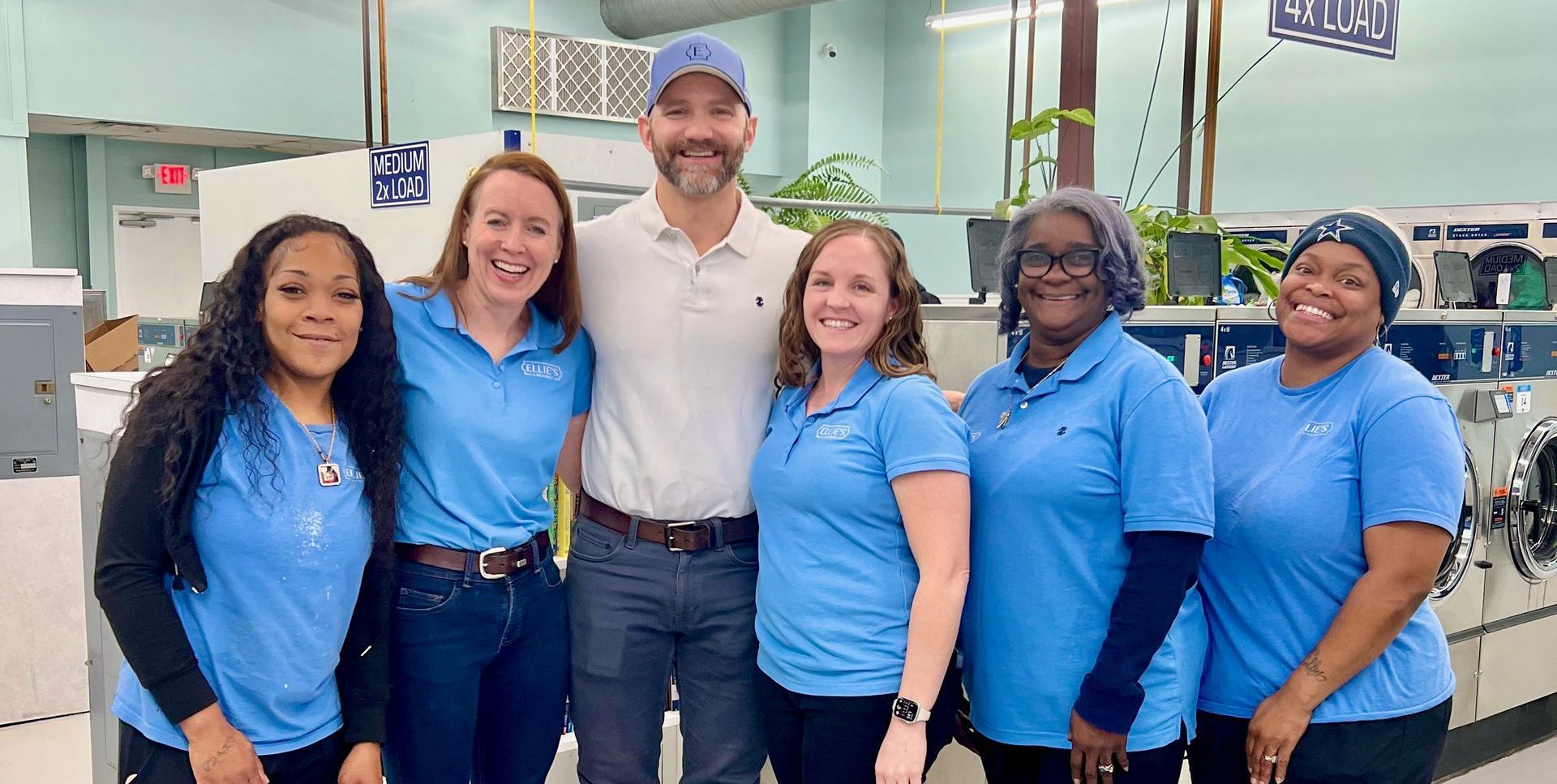
We operate three laundromats that offer wash-dry-fold laundry service, and we process several hundred thousand pounds of personal and commercial laundry every year. We wash everything from kids’ clothes and gym clothes to mechanic uniforms, oversized comforters, commercial linens, and entire households worth of laundry.
We do not offer dry cleaning to the general public. That is intentional. Our business is built around washing, drying, folding, organizing, and returning the regular laundry people actually use every day.
That experience gives us a very practical view of the difference between wash-dry-fold delivery and dry cleaning delivery.
What Is Wash-Dry-Fold Delivery?
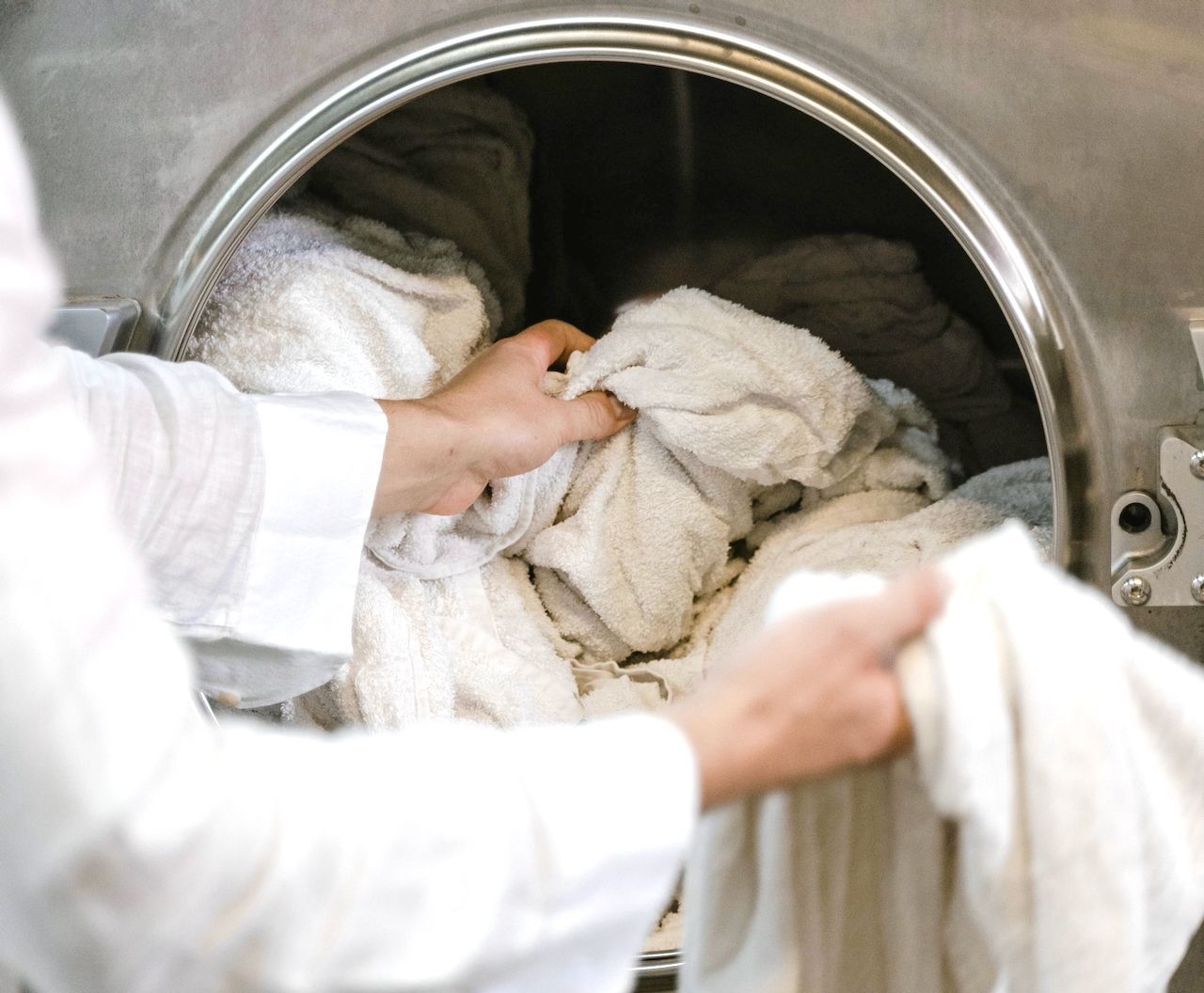
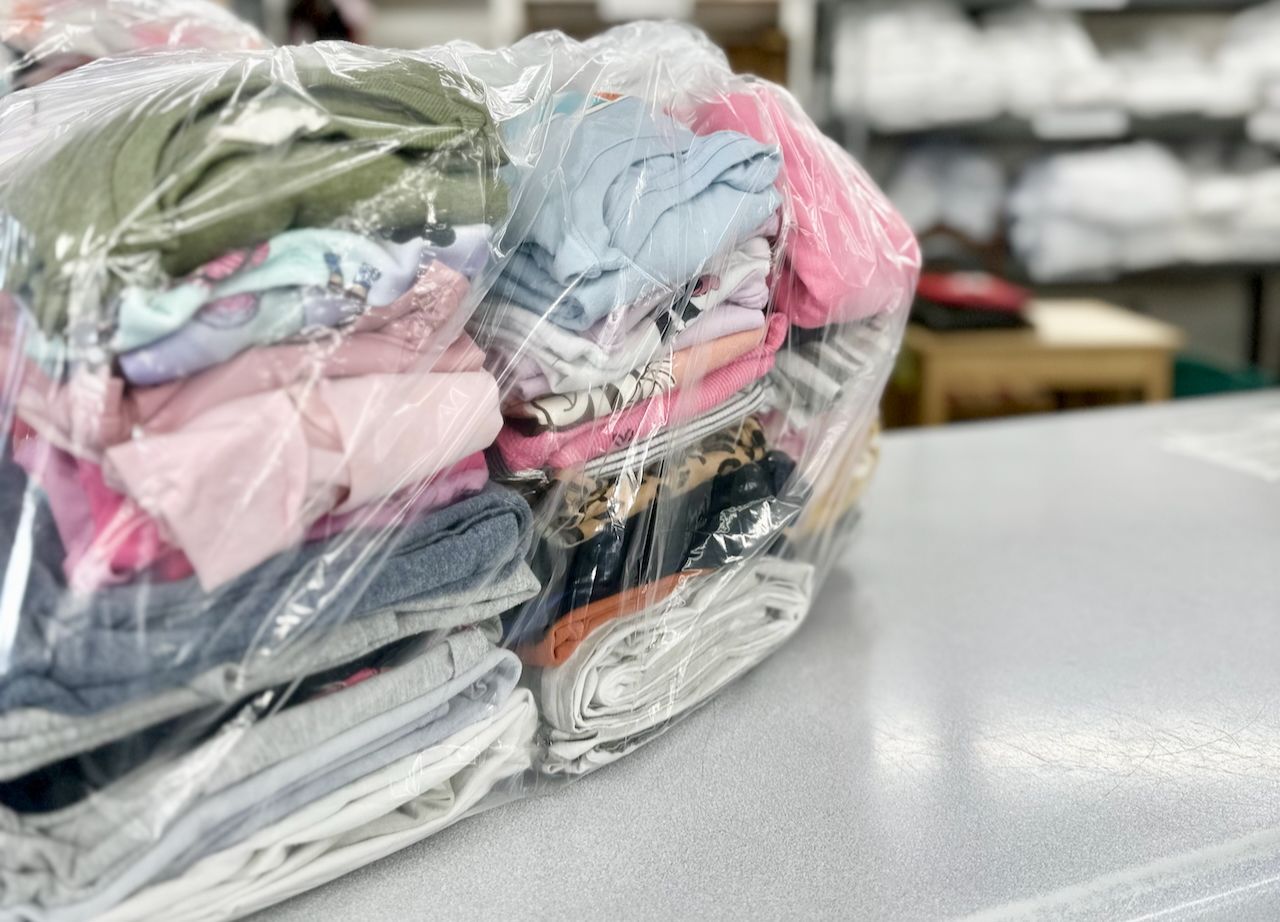
Wash-dry-fold delivery is exactly what it sounds like. Your regular laundry is picked up, washed, dried, folded, packaged, and returned to you.
This is the service for the clothes and household items that normally go into a washing machine and dryer.
That usually includes things like:
- Socks
- Underwear
- T-shirts
- Jeans
- Shorts
- Pajamas
- Towels
- Sheets
- Gym clothes
- Kids’ clothes
- School uniforms
- Work clothes
- Comforters
- Blankets
- Many everyday household laundry items
Most people are not looking to dry clean their socks, underwear, towels, or gym clothes. They just want them clean, folded, organized, and returned without spending their weekend doing laundry.
That is where wash-dry-fold delivery shines.
What Is Dry Cleaning Delivery?
Dry cleaning delivery is for garments that require a different cleaning process than normal washing and drying.
This is usually for nicer, more delicate, or more structured items such as:
- Suits
- Sport coats
- Dress pants
- Formal dresses
- Certain blouses
- Certain coats
- Specialty garments labeled dry-clean-only
Dry cleaning items are typically returned on hangers, often grouped in plastic garment bags. That is very different from wash-dry-fold, where your everyday laundry comes back folded and packaged.
The easiest way to decide is to check the care tag. If the tag says “dry clean only,” then you should generally send that item to a dry cleaner.
If it does not require dry cleaning, it is probably a better fit for wash-dry-fold.
The Biggest Difference Is the Type of Clothes Being Cleaned
The biggest practical difference between wash-dry-fold delivery and dry cleaning delivery is the type of laundry each service is designed to handle.
Wash-dry-fold handles the clothes people actually wear every day.
Dry cleaning handles specialty garments.
For most households, the weekly laundry problem is not a closet full of suits. The real problem is piles of socks, towels, school clothes, gym clothes, pajamas, sheets, and the endless laundry that seems to multiply every day.
That is the laundry we process.
We handle the regular clothing and household laundry that families, professionals, students, mechanics, commercial customers, and busy households need cleaned every week.
Dry cleaning has its place. If you have a nice suit or a garment that specifically requires dry cleaning, use a dry cleaner.
But if you are trying to get your family’s laundry under control, wash-dry-fold is usually the service you are actually looking for.
Wash-Dry-Fold Comes Back Folded and Organized
Another major difference is how the laundry is returned.
Dry cleaning is usually returned on hangers. Items may be individually bagged or grouped together in garment bags.
Wash-dry-fold comes back folded, packaged, and ready to put away.
That matters more than people realize.
For example, we work with families who do not just need clean clothes. They need the laundry organized in a way that helps the household function. If a family has five to seven children, they do not want all of the clothes dumped back together in one giant pile.
They want each person’s laundry separated, folded, matched, and packaged so it can go straight into drawers.
That includes the little things, like matching kids’ socks. Any parent knows that finding the three-year-old’s socks in a mountain of laundry can feel like a full-time job by itself.
With wash-dry-fold, that is part of the value. The service is not just washing the clothes. It is taking a recurring household chore and turning it into something manageable.
A Real Example: The Busy Mom With Five Kids
One of the easiest examples is a busy mom with five kids.
She is not just trying to get the laundry washed. She is trying to avoid spending her entire Saturday arguing with children about whose turn it is to fold clothes, separate clothes, or find missing socks.
That is where wash-dry-fold delivery can be a real household relief.
If each family member’s laundry comes to us in individual bags, which we can provide, we can wash, dry, fold, and package each person’s laundry separately. When it comes back, it is not a giant mixed-up pile.
It is clean, folded, organized, and ready to be put away.
That is very different from dry cleaning delivery.
Dry cleaning may help with a suit or a dress shirt. Wash-dry-fold helps with the mountain of laundry that keeps showing up every week.
Wash-Dry-Fold Is Also Great for Oversized Household Items
A lot of customers also use wash-dry-fold for items that technically can be washed but do not fit well in a normal residential washer and dryer.
This often includes:
- Queen comforters
- King comforters
- Large blankets
- Bulky bedding
- Oversized household laundry
Many people try to force these items into their home machines, but they do not always wash or dry properly. Commercial laundry equipment is better suited for these larger items.
So even if you normally do your own laundry, wash-dry-fold can still be helpful for the items that are too large, too bulky, or too inconvenient to handle at home.
Commercial Wash-Dry-Fold Is Different From Household Laundry
Wash-dry-fold is not just for residential customers.
We also process commercial laundry. That can include everything from large commercial linens to work clothes and other washable items used by businesses.
Commercial customers often need consistency, volume, and reliability. They are not dropping off one laundry basket. They may be bringing in large amounts of laundry that need to be processed correctly and returned on schedule.
That is one reason experience matters. Processing several hundred thousand pounds of laundry per year gives you a real understanding of how to sort, wash, dry, fold, package, and return laundry in a way that works for different types of customers.
A mechanic who does not want to spend the weekend washing work clothes has a different need than a large household with seven children. A commercial linen customer has a different need than someone bringing in comforters. Wash-dry-fold is flexible enough to handle all of those situations when the items are washable.
Where Dry Cleaning Fits In
Dry cleaning is still important. It is just not the same service.
If you have a nice suit, a formal garment, or anything labeled dry-clean-only, that item should generally go to a dry cleaner.
We do not offer dry cleaning to the general public. We focus on wash-dry-fold because that is what we do every day, at high volume, for residential and commercial customers.
However, there are certain commercial situations where dry cleaning becomes part of a larger laundry project.
For example, in catastrophe restoration work, such as fire, smoke, or flood situations, an entire home’s contents may need to be processed. Some of those items may be regular washable laundry. Other items may require dry cleaning.
In those cases, we can separate the dry cleaning from the regular washable items and work with a commercial dry cleaning plant in town. That is handled on a case-by-case basis, usually for commercial restoration operators, not as a general public dry cleaning service.
A Real Example: Fire, Smoke, and Flood Restoration Laundry
One of the more specialized situations we deal with is laundry from a home affected by fire, smoke, or flooding.
Imagine a home where the fire department has been there. Some clothing may be soaking wet. Other clothing may be dry but smell strongly of smoke.
The homeowner may not know what can be saved, and the restoration company may be dealing with an entire house full of contents.
In that situation, the job is bigger than a normal laundry order.
We can help sort the laundry, separate out the dry-clean-only items, coordinate those dry cleaning items with a commercial dry cleaning plant, and process the washable laundry through wash-dry-fold.
As long as the clothes are not physically damaged by fire, many items can typically be restored through the proper washing process, sanitizers, and odor removal products.
For restoration companies, this creates a one-stop solution. Instead of trying to figure out what to do with wet clothes, smoke-damaged laundry, dry-clean-only garments, and regular household laundry separately, they can work through one process.
That is not the normal weekly household wash-dry-fold order, but it shows the difference between everyday washable laundry and true dry cleaning needs.
Which Service Is More Convenient?
Both services can be convenient, but they solve different problems.
Dry cleaning delivery is convenient when you have specialty garments that need professional garment care.
Wash-dry-fold delivery is convenient when you are overwhelmed by regular laundry.
For most people, regular laundry is the bigger recurring problem. It shows up every week. Sometimes every day.
Wash-dry-fold helps with:
- Saving time
- Reducing household stress
- Keeping laundry from piling up
- Handling bulky bedding
- Organizing family laundry
- Helping busy professionals
- Helping parents manage large households
- Helping commercial customers process washable items at scale
Dry cleaning helps with:
- Protecting specialty garments
- Cleaning dry-clean-only clothing
- Maintaining suits, formalwear, and structured garments
- Handling fabrics that should not go through a normal washer and dryer
Both can be useful. They are just not interchangeable.
How to Decide What to Send
The easiest rule is this: Read the tag.
If the tag says dry-clean-only, send it to a dry cleaner.
If it is regular washable laundry, wash-dry-fold is probably the better fit.
That includes most of the items people wear and use every day: socks, underwear, towels, sheets, kids’ clothes, gym clothes, pajamas, work clothes, and everyday household laundry.
If you are not sure, check the care label before sending it in.
What Not to Send to Wash-Dry-Fold
In general, do not send items to wash-dry-fold that clearly require dry cleaning.
That may include:
- Suits
- Structured jackets
- Formal dresses
- Delicate garments labeled dry-clean-only
- Specialty fabrics that cannot be washed
- Anything with a care tag that says dry-clean-only
There may be exceptions depending on the item, but the safest advice is simple: if the manufacturer says dry-clean-only, treat it that way.
What Wash-Dry-Fold Does Better Than Dry Cleaning
Wash-dry-fold is not better than dry cleaning for every item. You should not wash-dry-fold a suit that needs to be dry cleaned.
But for everyday laundry, wash-dry-fold is usually the better service.
It is better suited for:
- Large volumes of regular clothing
- Family laundry
- Kids’ clothes
- Socks and underwear
- Towels and sheets
- Gym clothes
- Work clothes
- Comforters and bedding
- Commercial washable laundry
It also returns the laundry in the format most people actually need: folded, packaged, and ready to put away.
Dry cleaning returns garments ready to hang in a closet.
Wash-dry-fold returns laundry ready to go into drawers, linen closets, bedrooms, bathrooms, and daily life.
The Bottom Line
Wash-dry-fold delivery and dry cleaning delivery are both useful services, but they are meant for different types of laundry.
Dry cleaning is for specialty garments that require dry cleaning. If you have a nice suit or something labeled dry-clean-only, use a dry cleaner.
Wash-dry-fold is for almost everything else.
It is for the regular laundry that piles up in your house every week. It is for the socks, underwear, towels, sheets, gym clothes, kids’ clothes, work clothes, comforters, and everyday items that need to be washed, dried, folded, organized, and returned.
Our opinion after processing several hundred thousand pounds of laundry a year is simple: do not overcomplicate it.
Read the tag.
If it says dry-clean-only, take it to a dry cleaner.
If it is regular washable laundry, wash-dry-fold delivery is probably exactly what you need.